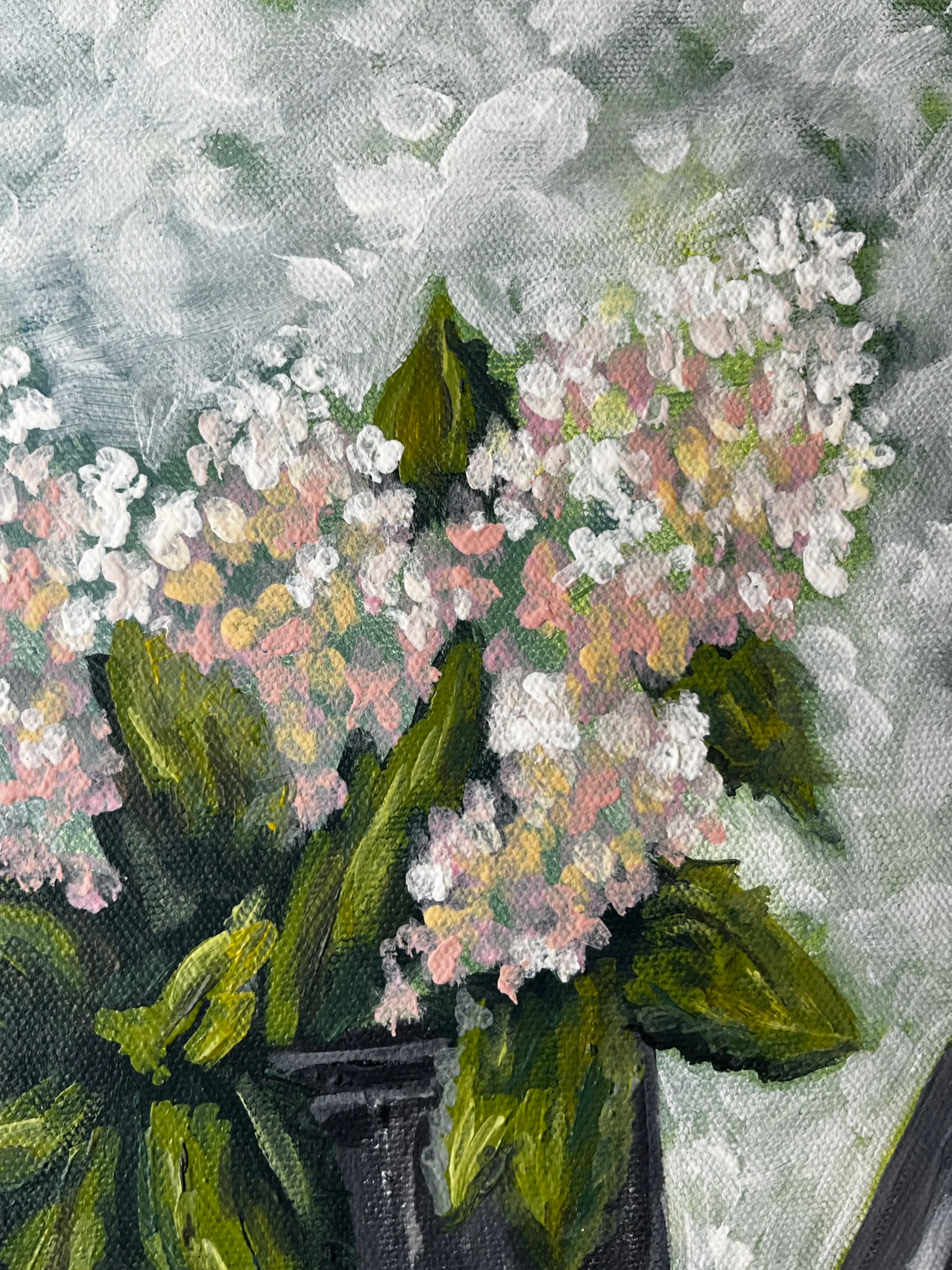
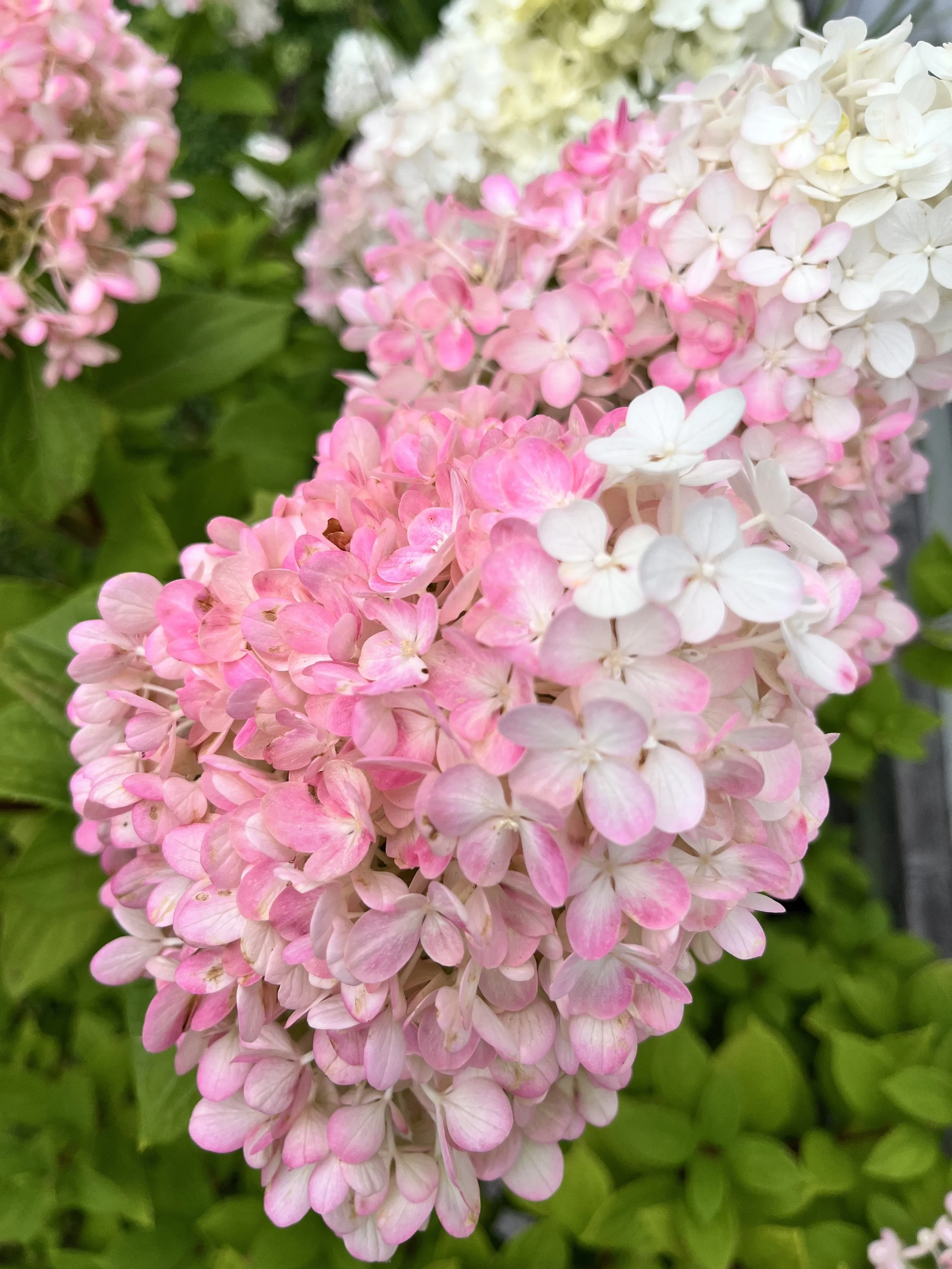
Hydrangea Painting
Hydrangea painting is one of those subjects that looks simple at first glance—but once you sit down to paint it, you quickly realize it comes with its own unique challenges. The layers of petals, subtle colour shifts, and soft, cloud-like structure can feel overwhelming, especially for beginners. The good news is that with a bit of guidance and the right approach, hydrangeas can become one of the most rewarding flowers to paint.
If you’ve been wanting to try hydrangea painting, this spring is the perfect time to start. I’m offering a limited free tutorial during spring 2026 where you’ll learn how to paint hydrangeas arranged in a metal watering can. This step-by-step lesson is designed to simplify the process and help you build confidence as you paint.
Hydrangea Painting
This blog post contains affiliate links meaning I earn a small commission for recommending supplies I love at no extra cost to you. Thank you for supporting a small business.
First of all, make sure you sign up for my free hydrangea painting. It will only be available for spring 2026, so do not miss out on this opportunity. You can download my free acrylic painting guide for beginners by clicking on the button below.
Once the tutorial is ready, I will send it to those who are on my email list. I send a free exclusive, acrylic, painting, tutorial, every spring and every fall to my email list.
Hydrangea Painting
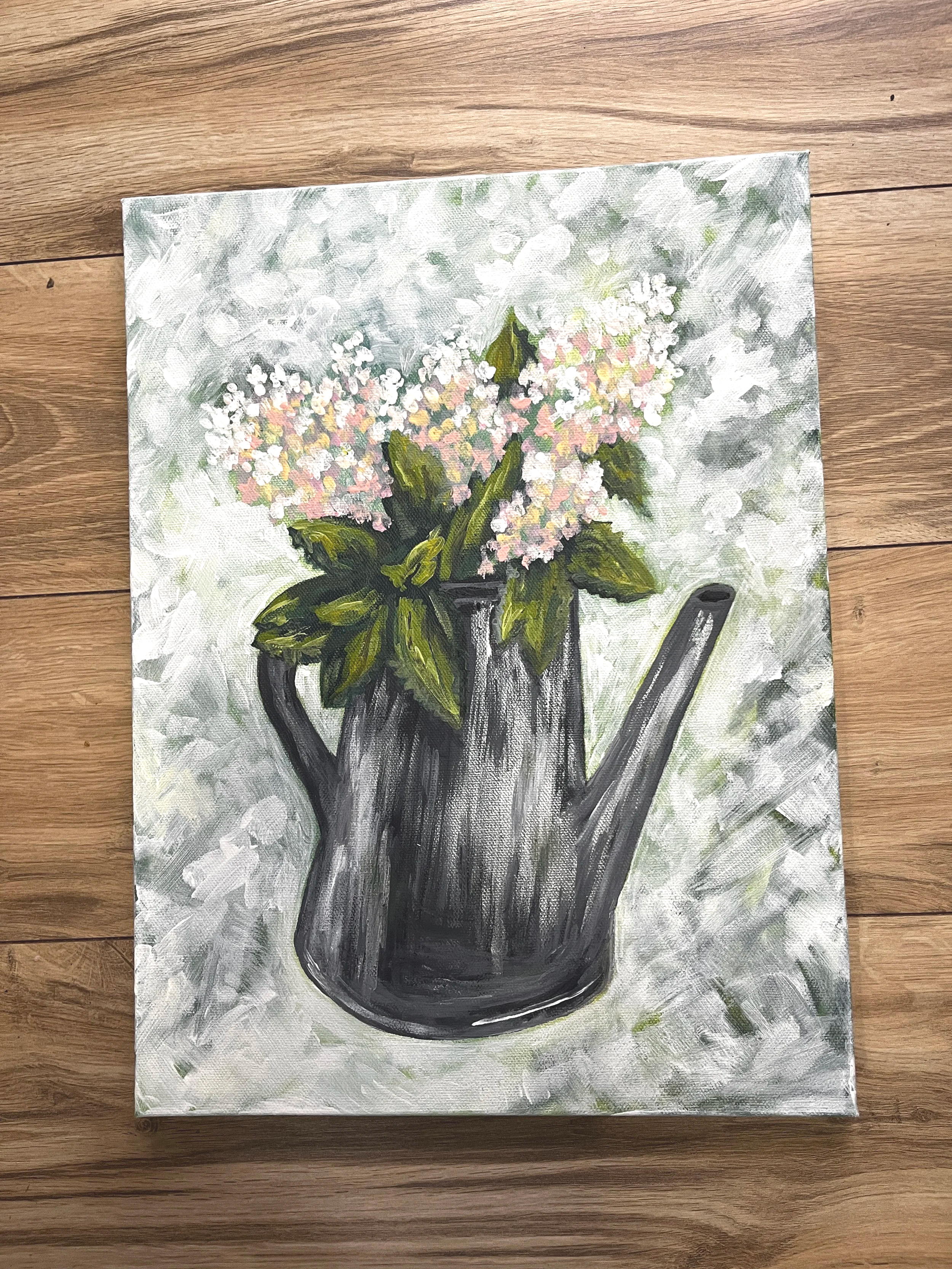
For this tutorial, we will be painting a silver metal watering can with beautiful pink and white hydrangeas inspired by the photo below.
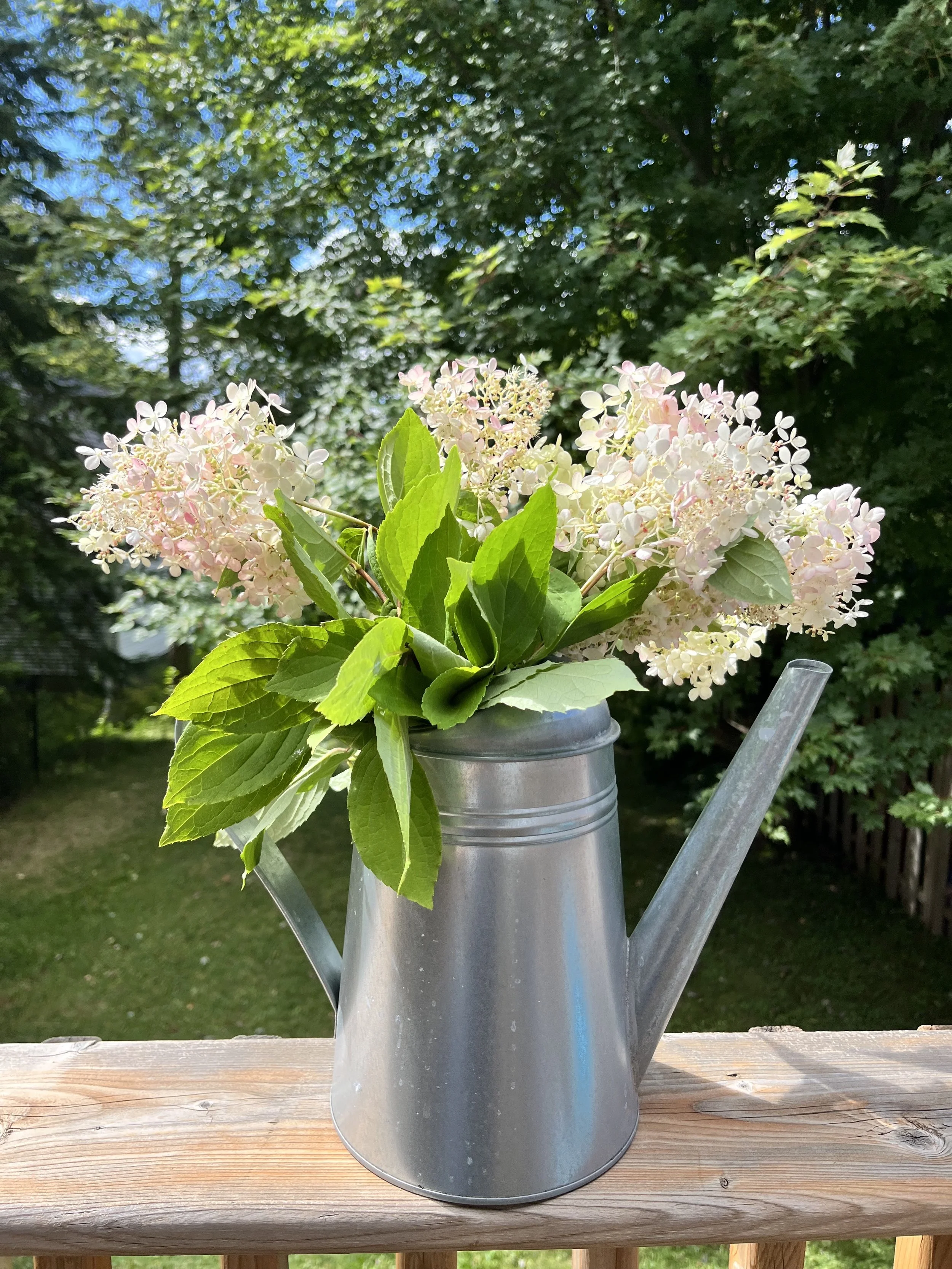
Why Hydrangea Painting Can Feel Difficult…
Hydrangeas are made up of dozens (sometimes hundreds) of tiny petals clustered together. Instead of painting one clear focal flower, you’re painting a mass of shapes that need to feel soft, loose, and natural all at once.
Here are a few reasons artists often struggle with hydrangea painting:
The petals are small and repetitive
It’s easy to get caught up in painting every single petal, which can make your painting feel tight and overworked.
The colours are subtle
Hydrangeas often include gentle shifts between blues, purples, pinks, and greens. Mixing these colours without them becoming muddy takes practice.
They rely on layering
To create depth, you need to build up layers gradually rather than finishing the flower in one pass.
The shape is more of a cluster than a single bloom
This makes it harder to know where to start and how to create highlights and shadows.
In the free spring tutorial, I walk you through a simple method that breaks the flower down into manageable steps so you don’t feel overwhelmed.
What You’ll Learn in the Free Hydrangea Painting Tutorial
Click the button below to download my free 12 page acrylic painting guide for beginners. Once you receive the guide, I will email you this painting, hydrangeas exclusive tutorial when it is ready during spring 2026.
In this limited-time spring 2026 tutorial, you’ll learn how to:
Block in the overall shape of hydrangeas without overthinking details
Layer colours to create soft, dimensional petals
Add highlights and shadows to make the flowers feel full and natural
Paint a metal watering can with simple reflections and texture
Bring the whole composition together in a calm, approachable way
This is a great project if you want something that feels seasonal, relaxing, and skill-building at the same time.
Download your free acrylic painting guide for beginners
If you’re newer to painting, I also recommend downloading my free acrylic painting guide for beginners. This guide walks you through foundational skills like:
How to use acrylic paint
Basic brush techniques
Colour mixing tips
How to build layers without frustration
It pairs perfectly with the hydrangea painting tutorial and will help you feel more confident before you even start.
Supplies You’ll Need for Hydrangea Painting
You don’t need anything overly complicated to get started. Here’s a simple list of supplies to gather:
Acrylic paint colours
White
Blue (such as ultramarine or cobalt blue)
Yellow (for mixing greens and subtle highlights)
A small amount of black (for deepening shadows)
Cadmium red
Paint brushes
A medium flat brush for blocking in shapes
A small round brush for petals and details
A medium round brush
Canvas or painting surface
A stretched canvas, canvas board, or acrylic paper/watercolour paper
Palette
Any surface for mixing paint (palette paper, plastic palette, or even a plate)
Water container and old cloth
For rinsing brushes and controlling moisture
Coloured chalk
For lightly sketching your composition before painting
Optional
Reference photo or the guided tutorial
Apron or old clothing
A gentle reminder as you begin
Hydrangea painting is not about perfection. In fact, the beauty of these flowers often comes from a loose, impressionistic approach rather than precise detail. Allow yourself to experiment, layer slowly, and enjoy the process.
If you’d like support along the way, make sure to sign up for the limited free spring 2026 tutorial. It’s a great opportunity to follow along step-by-step and create a finished painting you’ll feel proud of.