How to Make a Gold Paint (And Why It’s Harder Than You Think)
Gold is one of the most requested colours in painting, it adds, beauty, richness, and shine, and one of the most frustrating to mix. Learn how to make a gold paint and why it is a lot harder than you think.
If you’ve ever tried to create gold using just primary colours, you’ve probably ended up with something that looks… a bit flat, muddy, or just plain yellow.
There’s a reason for that.
How to Make a Gold Paint

This guide walks you through:
why gold is so difficult to mix
what you can do to get close
and when it actually makes sense to use metallic paint instead
Why Gold Is So Difficult to Mix?
The short answer: gold isn’t just a colour—it’s a surface quality.
When we see gold, we’re not just seeing yellow. We’re seeing:
reflection
light bouncing off metallic particles
subtle shifts between warm and cool tones
Regular acrylic paint doesn’t reflect light the same way. That’s why even a “perfect” colour mix still won’t look truly metallic.
A Simple Way to Mix a “Gold-Like” Colour
While you can’t mix true metallic gold, you can create a convincing flat version for certain projects.
A simple starting mix:
yellow
a tiny amount of black
The black helps:
dull the brightness of yellow
shift it toward a warmer, more natural tone
From there, you can adjust with:
a touch of red (to warm it up)
a bit of white (for highlights)
This works well for:
paintings where realism isn’t the goal
underpaintings
colour studies
But it still won’t give you that reflective shine.
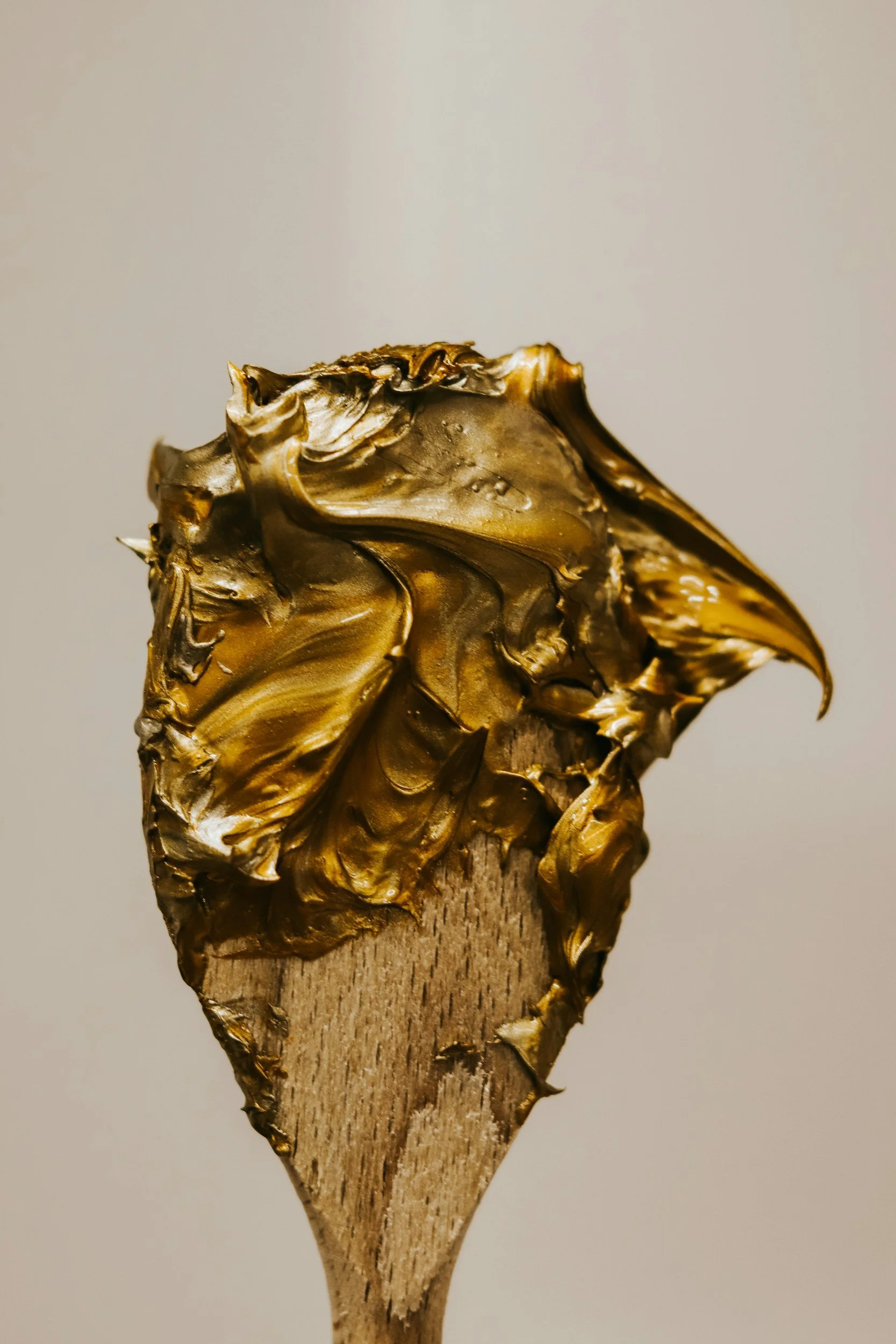
Why Metallic Paint Works Better
If you’re aiming for that true gold effect, metallic paint is fundamentally different.
Metallic acrylics are made using special pigments like mica or aluminium that reflect light, creating that signature shimmer.
That reflective quality is something you simply cannot mix from standard paint.
A Reliable Option for Gold Paint
If you want a consistent, realistic gold, a ready-made metallic is often the best tool for the job.
For example, the Liquitex Basics metallic range includes colours like Metallic Yellow Gold, which offer:
opaque coverage
a luminous, multi-dimensional finish
a smooth, easy-to-use consistency
These paints are designed to:
blend easily
work across surfaces (canvas, paper, wood, and more)
provide durable, flexible results that resist cracking or yellowing over time
In other words, they solve the exact problems that come up when trying to mix gold manually.
When to Mix vs. When to Use Metallic Paint
Here’s a practical way to think about it:
Mix your own gold-like colour when:
you’re teaching colour theory
you want a matte, painted look
you’re working on studies or backgrounds
Use metallic gold paint when:
you want a realistic gold effect
you’re creating finished artwork
you need consistency and coverage
adding gold as a top layer to finish a painting
A Helpful Tip for Better Results
Even when using metallic gold paint, you can improve the result by:
layering it over a warm base colour (like burnt sienna or ochre)
adding small highlights with lighter gold or white
varnishing your finished piece to enhance shine
Where to Find a Good Gold Paint
If you’re looking for an easy, reliable option, you can explore metallic acrylics here:
Browse Liquitex Basics Metallic Paints
Here’s a great set that won’t break the bank!
If you’re just starting, a single tube of gold is often enough to experiment with and see how it fits into your work.
This blog post contains affiliate links -meaning I earn a small commission for sharing art supplies that I love and use.
Conclusion:
Mixing gold is a great exercise in colour theory—but it also highlights an important truth:
Some effects in art aren’t just about colour—they’re about materials.
Understanding that difference helps you:
choose the right tools
avoid frustration
and get better results, faster
Whether you mix your own or use metallic paint, both approaches have value—it just depends on what you’re trying to create.
Related Articles:
Check out my colour mixing bundle and save 30%
Shop my Amazon storefront for art supplies