5 Remembrance Day Artwork Ideas for High School Art Students
Here are 5 Remembrance Day artwork ideas for high school art students save this for November and feel free to use these ideas for Veterans Day too.
5 Remembrance Day Artwork Ideas for High School Art Students
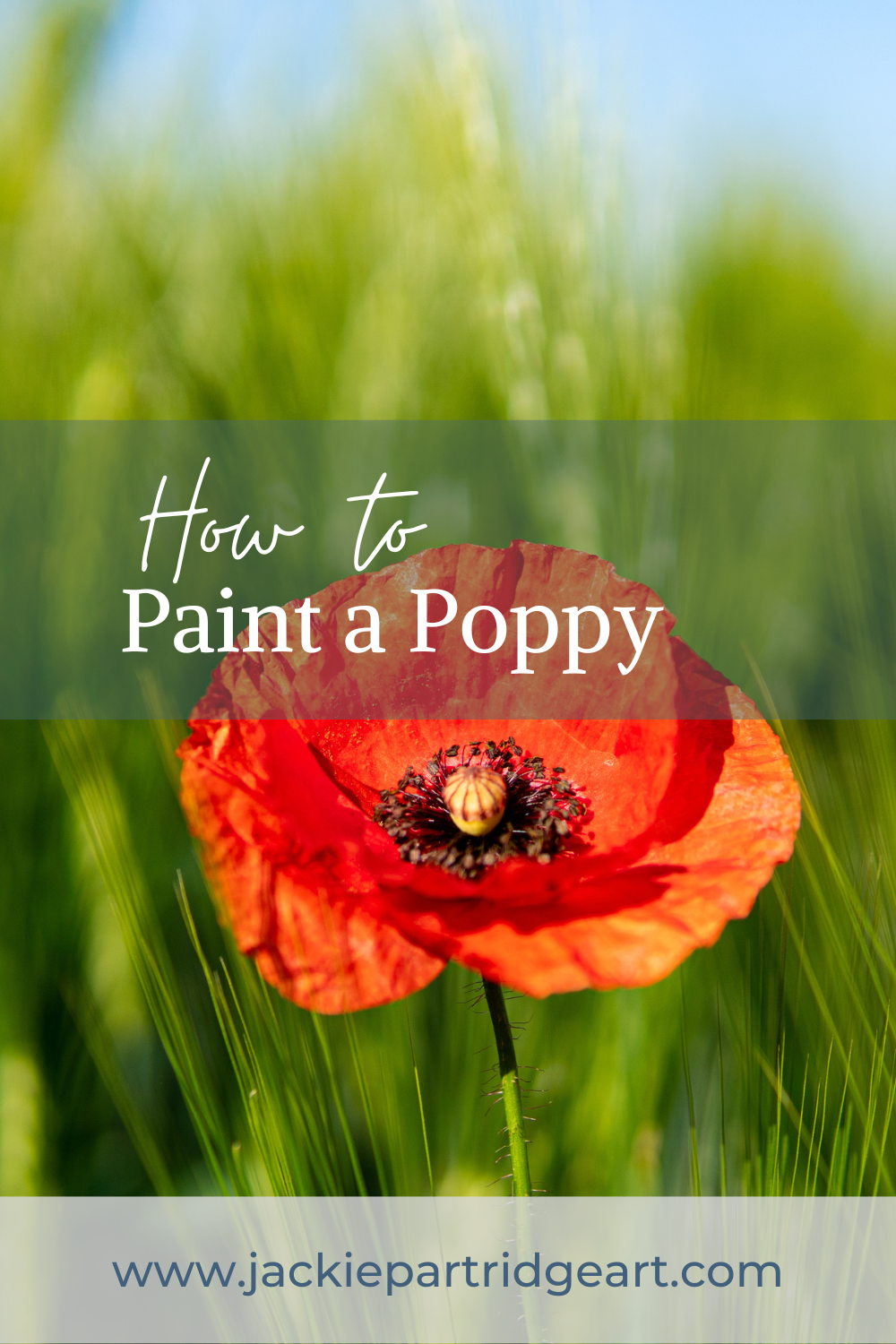
Remembrance Day asks for something most Halloween or holiday art projects don't: a bit of quiet and a bit of meaning. High school students are old enough to sit with that, and a good Remembrance Day artwork project gives them a way to process something solemn through colour, texture, and their own words, rather than just drawing a poppy because the calendar says November.
Below are five Remembrance Day artwork ideas for high school art class, starting with an abstract poppy painting I filmed start to finish on my YouTube channel, and moving through pastel drawing, poetry and word art, landscape painting, and mixed media. Every one of them works just as well for a Veterans Day lesson south of the border, which I'll touch on further down.
5 Remembrance Day Artwork Ideas for High School Art Students
1. Abstract Poppy Painting with a Palette Knife (Watch the Tutorial)
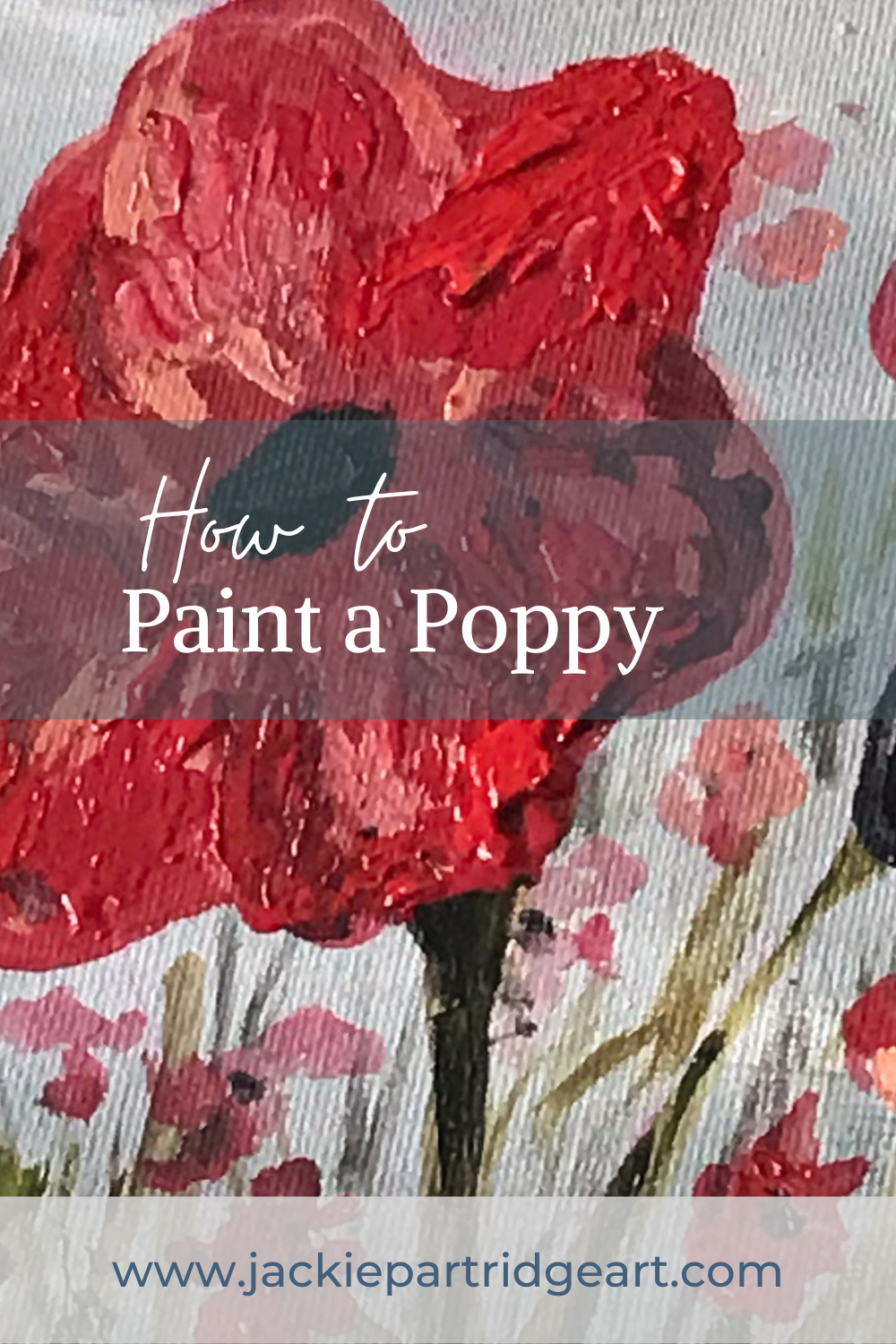
This is the project I want to highlight first, because I filmed the whole thing for my YouTube channel, Jackie Partridge Art: a single red poppy, painted entirely with a palette knife in a loose, abstract style. Thick acrylic gets loaded straight onto the knife and dragged, pressed, and layered to build the petals, with a dark, textured centre pulled in last. There's no fine brush detail anywhere in it.
I love this technique for a subject like the poppy specifically, because the abstraction keeps the focus on colour and emotion rather than botanical accuracy. Students aren't worried about getting every petal vein right. They're thinking about how much red, how much shadow, how loose or controlled their marks feel. You can watch the full step-by-step tutorial on my channel and use it as a demo before students try it on their own canvas.
2. Realistic Chalk Pastel Poppies
For students who want (or need) a more realistic result, pair a careful drawing method with chalk pastel. Have them start with either the grid method (dividing a reference photo and their paper into matching squares, then drawing one square at a time to keep proportions accurate) or a photo transfer to get a realistic pencil line drawing down without relying purely on freehand observation skills. From there, chalk pastel takes over: rich reds and near-blacks built up in the petals and centre, blended with fingers or a blending stump into a soft, smudgy background that pushes the poppies forward. It's a nice contrast of crisp subject against a hazy, atmospheric ground, and a good project for students who find a loaded paintbrush intimidating but still want a realistic result.
3. Poetry and Word Art Poppy
This idea pairs beautifully with an English class unit, and you can run it two ways. Some students can simply write an original short poem reflecting on remembrance, sacrifice, or gratitude, then pair it with a small illustrated poppy. Others might prefer a word art piece: draw and cut out a large poppy silhouette, then fill the entire shape with hand-lettered words and phrases (lines from "In Flanders Fields," names, or words like honour, sacrifice, and lest we forget), layering the text densely enough that the words themselves become the texture of the petals. It's a strong project for a student who connects more with language than with realistic rendering, and it gives the whole piece a personal, reflective weight that a painted poppy alone doesn't always carry.
4. Silhouette Soldier Against a Poppy Field Sunset
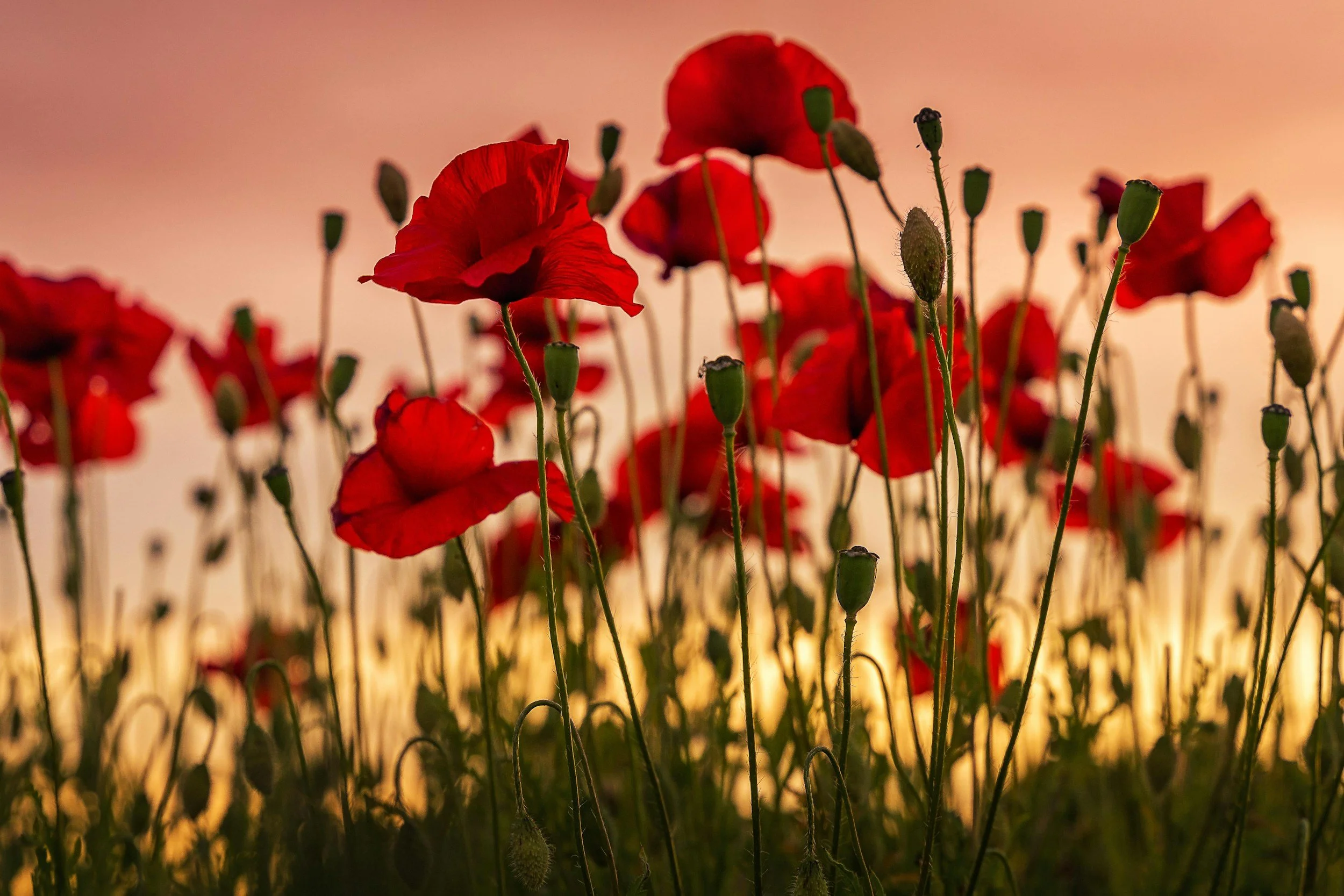
A single silhouetted figure, or a simple cross or headstone, set against a sweeping poppy field and a soft sunset sky makes for a quietly powerful composition. Students block in the gradient sky first, blending warm pinks and oranges down toward the horizon, then add the poppy field as loose dabs of red across the lower portion of the canvas once the sky has dried, finishing with the silhouette painted flat and dark on top. It's a good lesson in atmospheric perspective and in how much emotional weight a simple silhouette can carry against a detailed background.
5. Mixed-Media Remembrance Collage
I've always loved building mixed media into my own paintings: lace, old recipe cards, photo transfers of family photos, even bits of birch bark, layered in to make a piece more interesting than paint alone. A remembrance collage is a natural fit for that approach. Have students layer torn vintage-look paper, photocopied or transferred archival-style photographs, scraps of fabric or lace, and paper poppies into a composition, then unify it with paint or ink on top. If a student has a family member who served, they could incorporate a transferred copy of a real photo or letter excerpt, which tends to turn this from a classroom assignment into something genuinely personal.
Do These Ideas Work for Veterans Day Too?
Yes, and if you teach in the United States, all five of these projects adapt easily. Remembrance Day, observed on November 11th in Canada, the UK, and other Commonwealth countries, grew out of the WWI poem "In Flanders Fields" and centres on the poppy as a symbol of the fallen. Veterans Day, also November 11th in the US, honours all who have served, living and deceased, so the poppy still works as imagery (it's long been associated with the VFW's Buddy Poppy program), but you may want to widen the theme slightly: a flag instead of a poppy field, a dog tag or folded letter in the mixed-media piece, or a poem written as a thank-you rather than strictly an elegy. The techniques, from the palette knife painting to the word art, carry over without any changes at all.
FAQ: Remembrance Day Artwork for High School
What are good Remembrance Day artwork ideas for high school students? Strong options include an abstract palette knife poppy painting, a realistic chalk pastel poppy drawing, a poetry or word art piece shaped like a poppy, a silhouette landscape at sunset, and a mixed-media remembrance collage. Each one gives students a different way into the subject, from painterly to literary to collage-based.
What's a meaningful way for teens to paint a poppy? An abstract approach using a palette knife works well because it takes the pressure off botanical accuracy and puts the focus on colour, texture, and feeling. Thick acrylic built up in layers also gives the piece real physical texture, which reads as more striking than a flat, realistic poppy from across a room.
How can I combine poetry and visual art for a Remembrance Day project? Try a word art piece: have students draw a large poppy silhouette, then fill the whole shape with hand-lettered words, phrases, or lines of poetry related to remembrance, so the text itself becomes the texture of the artwork. It pairs naturally with an English class unit on war poetry.
Do Remembrance Day art projects work for Veterans Day too? Yes. The same techniques transfer directly to a Veterans Day lesson in the US. You may want to widen the imagery slightly, such as a flag or dog tag alongside or instead of the poppy, since Veterans Day honours all who served rather than specifically the fallen.
What supplies do I need for a chalk pastel poppy drawing? A reference photo, pencil and paper for the grid or transfer drawing, and a set of soft chalk pastels in reds, near-blacks, and a few background colours. Blending stumps or even a student's own fingers work well for softening the background.
Related Articles:
Subscribe to my YouTube Painting Channel
Check out my Amazon Storefront for Art Supplies for Students
Remembrance Day Art in the Classroom